Top Reasons to Invest in Finland
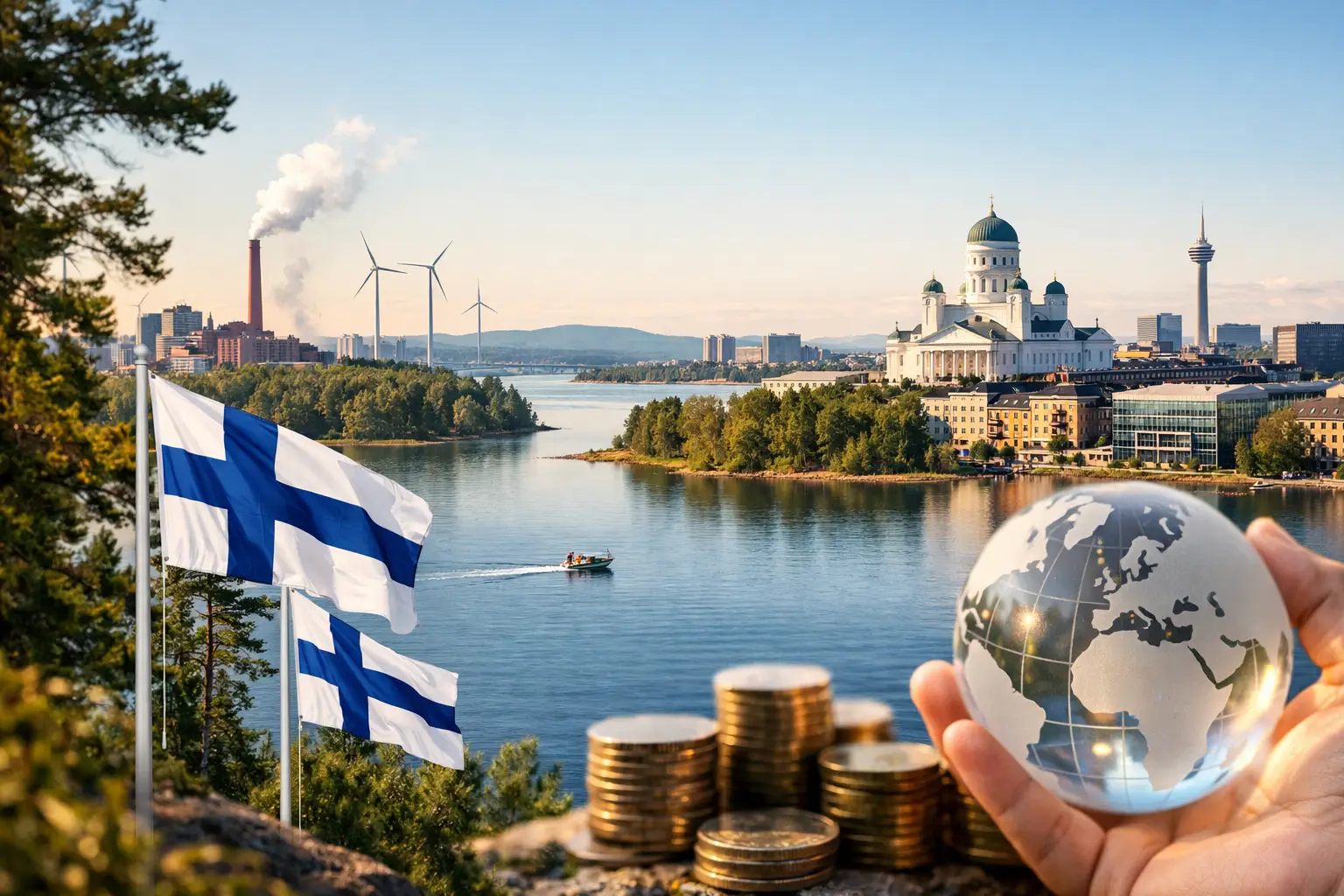
A market does not become attractive only because growth projections look good on paper. Senior decision-makers know the real test is whether a country can support predictable execution, protect capital, and offer a credible platform for long-term value creation. That is why the top reasons to invest Finland are not built on hype. They are grounded in institutional quality, technical capability, and a business environment that rewards discipline.
For companies assessing Nordic expansion, acquisition targets, industrial partnerships, or strategic relocation, Finland tends to stand out for a simple reason: it combines stability with substance. It is not the loudest market in Europe, but for many investors, that is precisely the point.
Top reasons to invest Finland for long-term value
The strongest investment cases are rarely based on one variable. Finland is compelling because several fundamentals reinforce each other. Political stability supports business confidence. Education supports productivity. Digital maturity supports speed. A transparent legal environment supports deal certainty. Together, these factors create a market where strategic plans are easier to implement and defend.
This matters especially for investors and owners who are not looking for short-lived momentum, but for durable operating conditions. Finland offers a setting where long-term planning is realistic, not aspirational.
Political and institutional stability
One of the clearest advantages is institutional reliability. Finland is known for strong governance, low corruption, and a legal framework that is transparent and consistently applied. For investors, this reduces friction where it matters most - contracts, regulation, compliance, and decision-making predictability.
In practical terms, a stable institutional environment lowers execution risk. Boards and investors can model scenarios with greater confidence when policy shifts are moderate, public administration functions efficiently, and the rule of law is not in question. This does not eliminate risk, of course. No market is immune to cyclical pressure, geopolitical spillover, or sector-specific shocks. But the baseline is unusually solid.
Highly educated talent with technical depth
Finland’s talent base remains one of its strongest strategic assets. The workforce is well educated, digitally capable, and particularly strong in engineering, industrial know-how, software, health technology, energy, and advanced manufacturing.
For investors, this creates two advantages. First, it improves the quality of operations. Second, it supports transformation. Businesses entering Finland are not only accessing labor - they are entering a market where technical competence can accelerate product development, process improvement, and innovation-led growth.
There is a trade-off to recognize. In highly specialized sectors, competition for top talent can be intense, especially outside larger labor pools. That said, many companies accept this because talent quality often offsets scale constraints.
Innovation capacity that translates into business
Finland has a strong reputation for research, applied technology, and commercial problem-solving. That reputation is not abstract. In many sectors, the market supports close cooperation between companies, universities, research institutions, and public innovation structures.
This is one of the top reasons to invest in Finland if your strategy depends on product development, R&D, or knowledge-intensive operations. The country offers a culture where innovation is treated as a business discipline rather than a branding exercise. Companies can test, build, and refine solutions with access to credible technical ecosystems.
The practical value is clearest in sectors where precision, safety, sustainability, and digital integration matter. Investors looking at industrial modernization, climate technology, health solutions, or intelligent systems often find Finland structurally aligned with those themes.
A business environment built for execution
A credible investment destination must also perform at the operating level. Finland does. Company formation, regulatory processes, digital public services, and administrative interactions are generally efficient by European standards. This reduces management drag and allows leadership teams to focus on strategy rather than procedural complexity.
Digital infrastructure and operational efficiency
Finland is one of Europe’s more digitally mature economies. Public and private systems are widely digitized, connectivity is strong, and organizations are generally comfortable operating in data-driven environments.
For business leaders, this means less time lost in manual processes and fragmented administration. It also supports faster integration after acquisitions, smoother reporting, and better scalability for companies with modern operating models. For service businesses, software firms, and technology-enabled industrial players, this is especially relevant.
The key point is not only that Finland uses digital tools. It is that digital capability is embedded across institutions and business culture. That creates compounding efficiency over time.
Strategic location with Nordic and EU access
Finland’s geography is sometimes misunderstood. It is not a central European logistics hub in the traditional sense, and companies seeking pure volume-based distribution may weigh other locations differently. But for firms targeting the Nordics, the Baltic region, and broader EU access, Finland can be strategically effective.
Its business culture is tightly connected to the Nordic market, and its regulatory and commercial environment aligns well with international operators. For companies based in Turku, Helsinki, or Tampere corridors, access to key regional networks is practical. Proximity to Stockholm, in particular, can be relevant for businesses working across Finnish and Swedish markets.
This is where strategy matters. Finland is not always the right answer for every expansion model. It is often the right answer for companies prioritizing quality of market entry, regional credibility, and long-term positioning over short-term volume.
Sustainability is a commercial factor, not a slogan
Finland is well positioned for investors who take sustainability seriously as an operating and capital allocation issue. Environmental performance, energy transition, circular economy capabilities, and responsible governance are increasingly relevant to enterprise value. In Finland, these themes are integrated into both policy and business practice.
That matters because sustainability requirements are no longer peripheral. They affect financing, procurement, customer expectations, and valuation. A market that is already moving in this direction can offer strategic advantages, especially for businesses that want to future-proof operations and meet rising stakeholder standards.
The nuance is that sustainability leadership still requires investment and execution discipline. Finland offers a favorable platform, but outcomes depend on sector, asset base, and management capability.
Why Finland appeals to strategic investors and acquirers
For investors evaluating acquisitions, owner-led businesses, or SME growth platforms, Finland offers a particularly interesting landscape. Many companies operate with strong technical competence, healthy specialization, and disciplined management cultures. In the lower and mid-market segments, there are businesses with real strategic value but significant untapped upside.
This can be attractive in M&A, especially when the buyer brings scaling capability, international channels, or sharper strategic focus. A well-run Finnish company may not always present itself aggressively, but beneath that modesty there is often durable operational quality.
For founders and owners considering exit or partnership options, this creates opportunity as well as complexity. A good asset in Finland can command serious interest if the strategic story is clear and the preparation is handled properly. That is one reason advisory quality matters. In transition situations, tailored support often determines whether value is merely recognized or fully realized.
The less obvious advantage: business culture
There is also a cultural dimension that international investors should not overlook. Finnish business culture tends to value directness, competence, preparation, and factual communication. For the right kind of operator, this is a major strength.
Meetings are usually purposeful. Commitments tend to matter. Excessive posturing is not generally rewarded. That can make cross-border cooperation more efficient, especially for executives who prefer clarity over ceremony.
Of course, this can require adjustment. Relationship-building still matters, but trust is often earned through consistency and substance rather than presentation alone. Companies that understand this usually perform better in market entry, hiring, and negotiation.
When Finland is the right investment decision
Finland is especially compelling when your investment thesis depends on resilience, skilled talent, innovation capacity, and a rules-based operating environment. It is less about spectacle and more about quality. That appeals to investors who think in terms of execution, integration, and long-range value creation.
If your priority is rapid expansion at any cost, Finland may not be the first market you choose. If your priority is building something durable in a sophisticated, stable, and technically capable environment, the case becomes much stronger.
That is the real logic behind the top reasons to invest Finland. The market rewards seriousness. And for decision-makers who value strategic clarity over noise, that is often where the best opportunities begin.